
About us
Orontes Hotel, an old Syrian house in Hama
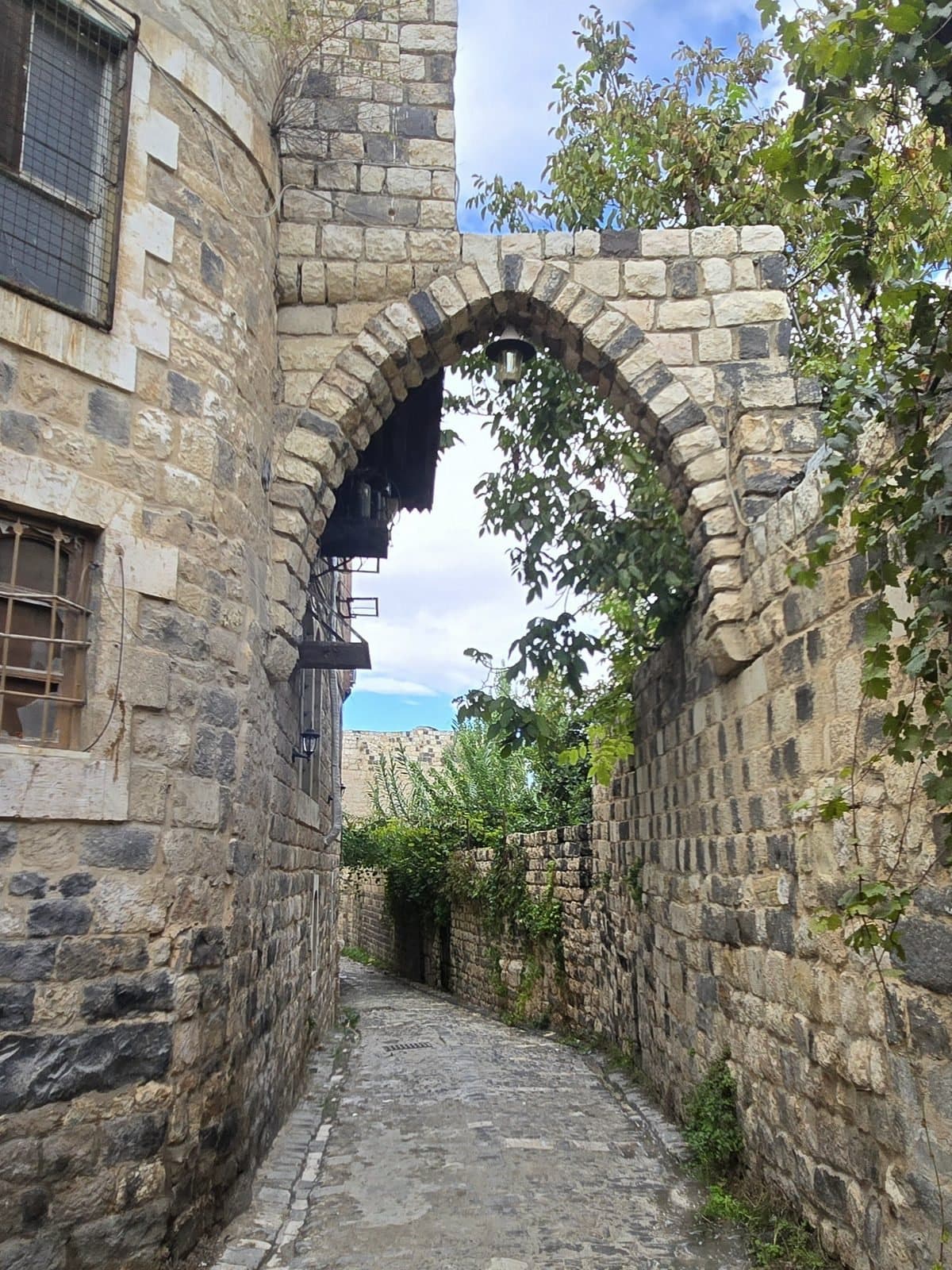
Orontes Hotel is a small hotel in an old Syrian house on Abi al-Fida Street in the Al-Tawafra quarter of Hama, a few steps from the Asi river and its norias. Behind a stone gate lie an entrance hall of black and cream ablaq stone and a vaulted iwan; the house has six types of room, two of them looking out to the norias, and right next door is Orontes Restaurant, where guests can have breakfast. Guests book directly, hear back within 12 hours and pay in cash on arrival.
At a glance
- Where
- Abi al-Fida Street, Al-Tawafra Opposite the Artists' Syndicate Hama, Syria
- Open in Google MapsWhat to see nearby
- Rooms
- Six room types, from $35 a night
- See the rooms
How booking works
Send a request
Pick your dates and rooms on the website and send them to us.
We reply within 12 hours
We confirm your stay by email.
Pay on arrival
Nothing to pay in advance: you pay in cash at the hotel.
- Groups welcome
- Families, companies and travel agencies can book several rooms in one request.
Our story
Orontes Hotel lives in an old Syrian house in the Al-Tawafra quarter of Hama, a short walk from the Asi river and its norias. Like the old houses of Hama, it shows a quiet stone face to the lane and keeps its beauty inside.
Inside, it is built the way Hama has long built: bands of black and white stone, the ablaq of old Syria, arched wooden doors, and an iwan, the vaulted hall where the air stays cool through the summer. These are still the heart of the house.
Today its doors are open to guests, so you can stay in Hama the old way, a few steps from the river and its norias. Right next door, in its own building, is Orontes Restaurant, where our guests have breakfast.
In the house
Through the house
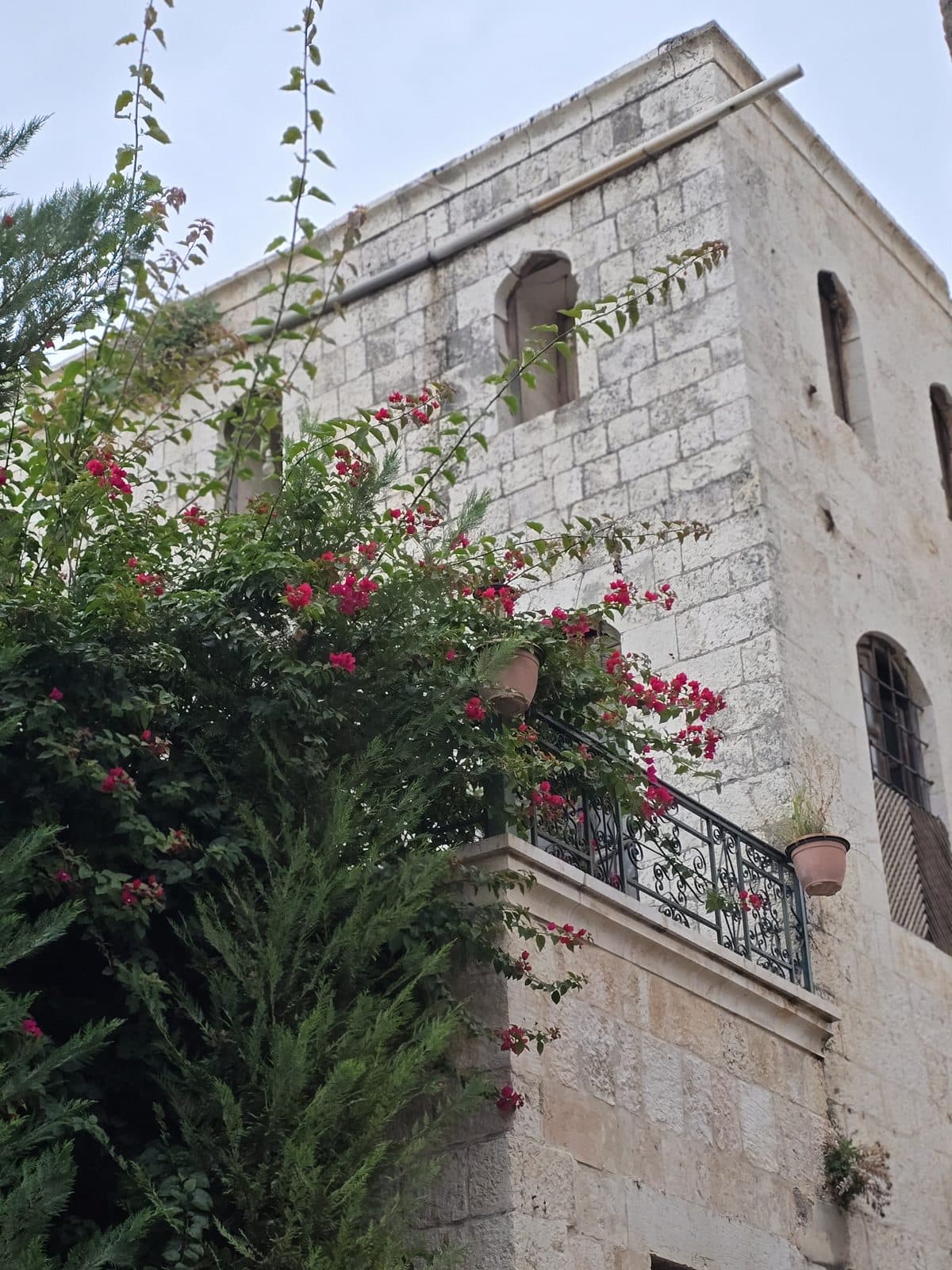
Old Syrian houses turn a quiet face to the street and keep their beauty inside. Here is Orontes Hotel the way a guest walks in, from the gate on the lane to the rooms.
The gate
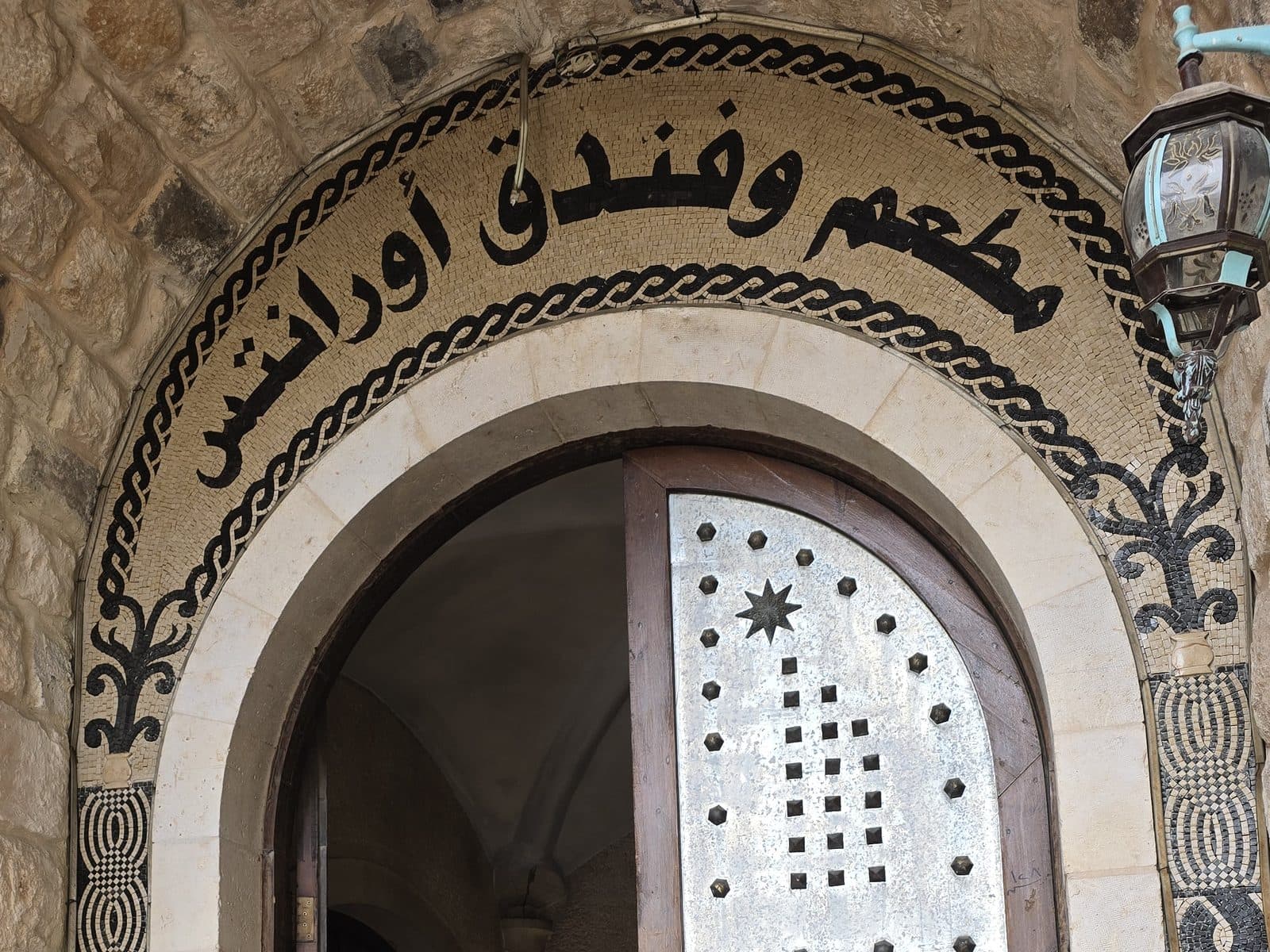
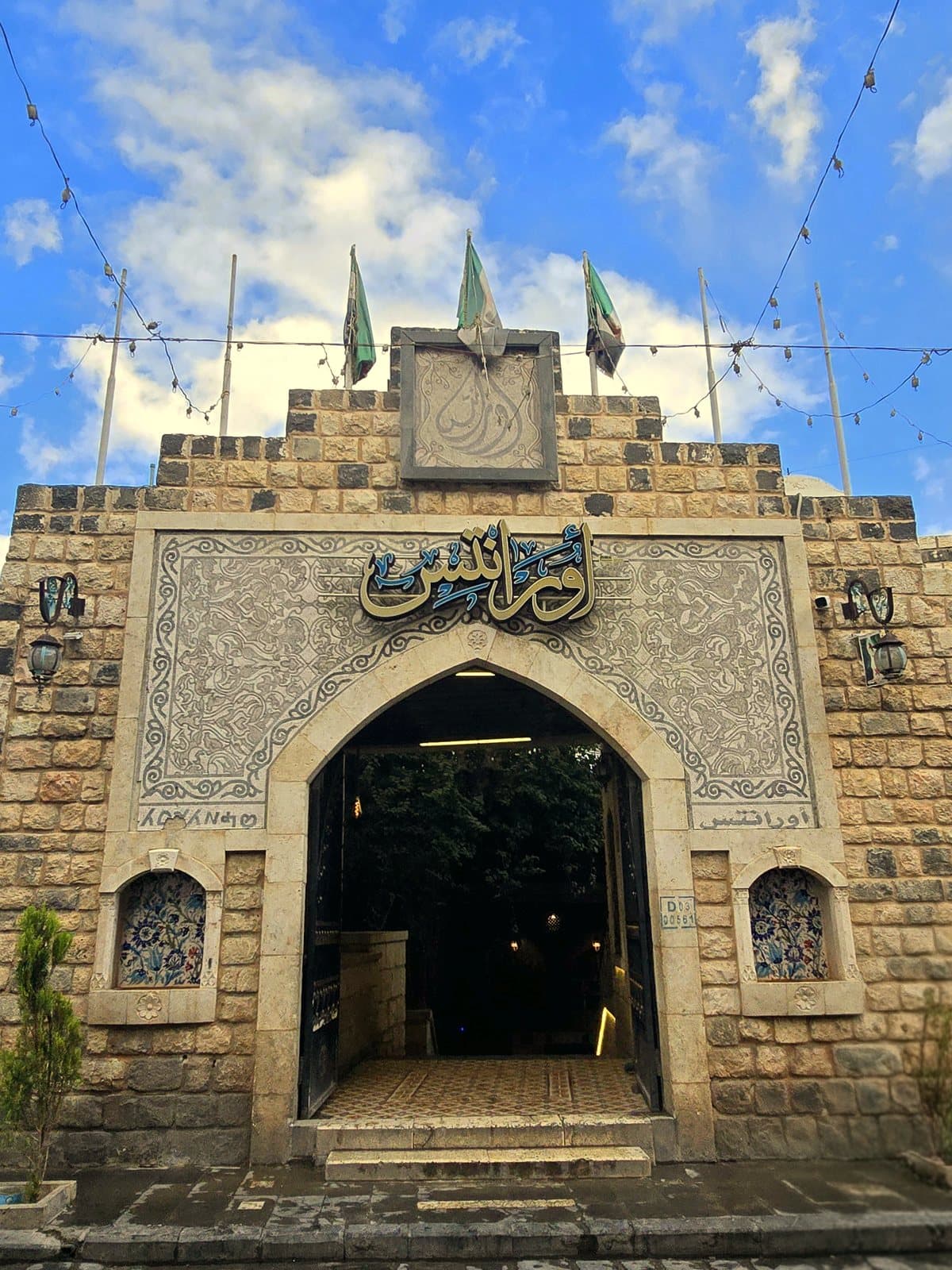
From the lane you see a stone wall and an arched gate under the name Orontes in black-and-white mosaic. Nothing of the house shows from outside: that is how these houses were built, quiet towards the street. A short passage leads in.
The mosaic arch spells «مطعم وفندق أورانتس», Orontes Restaurant and Hotel, in black stone within a twisted-rope border, with branching motifs climbing its sides. The door beneath is clad in pale metal pierced with an eight-pointed star, and an old lantern hangs beside the arch.
The entrance hall
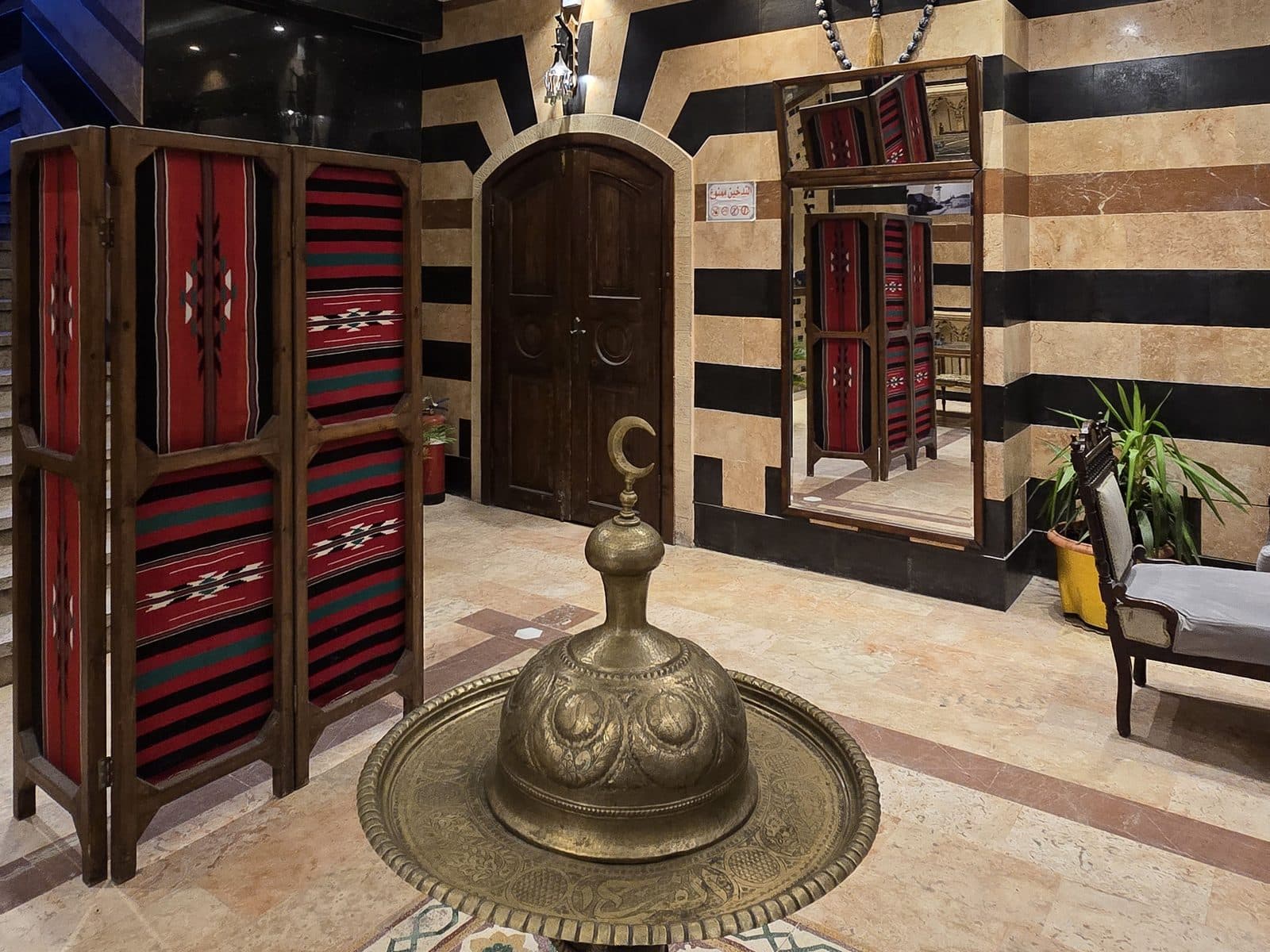
The passage leads into the entrance hall, where bands of black and cream stone, the ablaq of old Hama and Damascus, frame an arched wooden door. A Bedouin-woven screen, an engraved brass stand and a brass lantern hanging from the ceiling greet guests as they come in.
Ablaq, courses of dark basalt laid with pale limestone, marks the finest old buildings of Hama, like the minaret of Al-Nuri Mosque a minute away; here it runs from floor to ceiling. The screen's red, black and green weave is the cloth of the Bedouin tents of the Syrian steppe, and a tall mirror doubles it across the hall.
The iwan
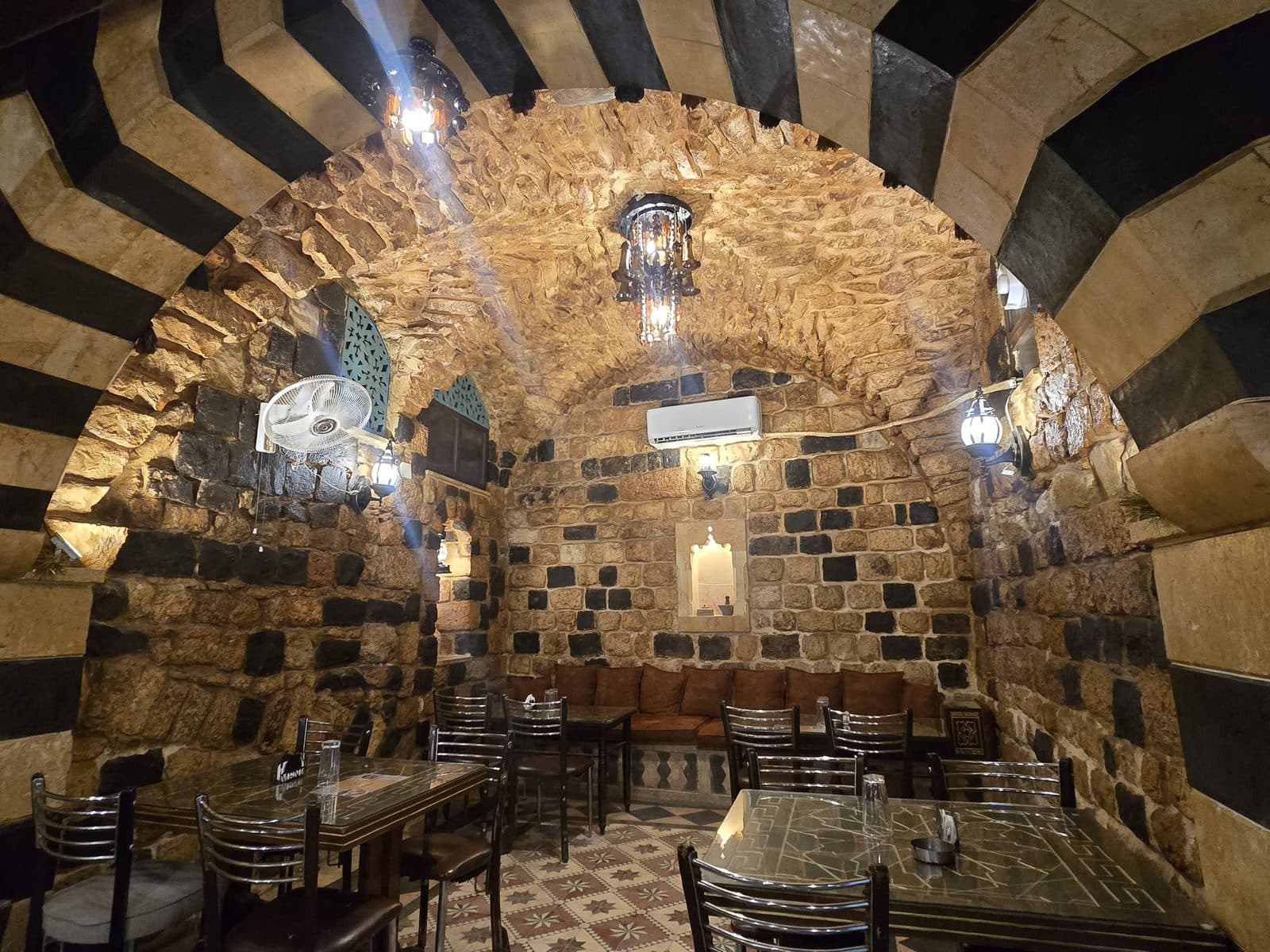
Through a great arch of black and cream stone opens the iwan, the vaulted hall that old Syrian houses built for sitting together: rough-cut stone overhead, lanterns hanging from the vault and a cushioned bench along the back wall.
In old Syrian houses the iwan was the room open on one side where the family gathered, its thick stone keeping out the summer heat. Here small tables stand on the patterned tiles, turquoise lattice windows open high in the side wall, and a lit niche glows in the stone at the back.
The stone steps
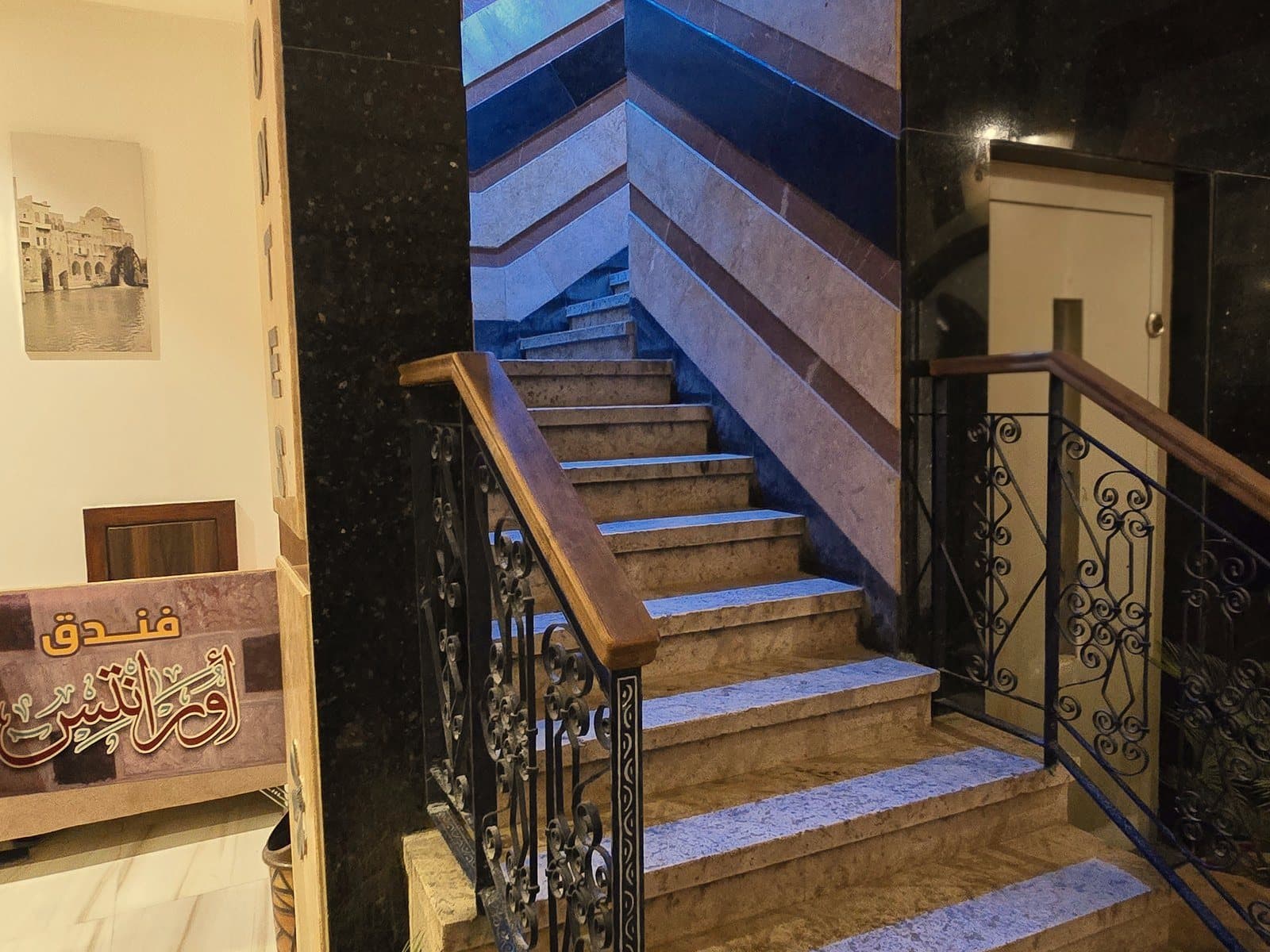
Marble steps climb towards the rooms between wrought-iron railings with a wooden handrail, framed in black granite.
Above them, the stairwell wall is laid in bands of pale and dark stone that zigzag with the flight, recalling the striped ablaq of Hama's old houses, and washed in a soft blue light. At the foot of the stairs, the hotel's name, فندق أورانتس, greets you in Arabic calligraphy.
To the rooms
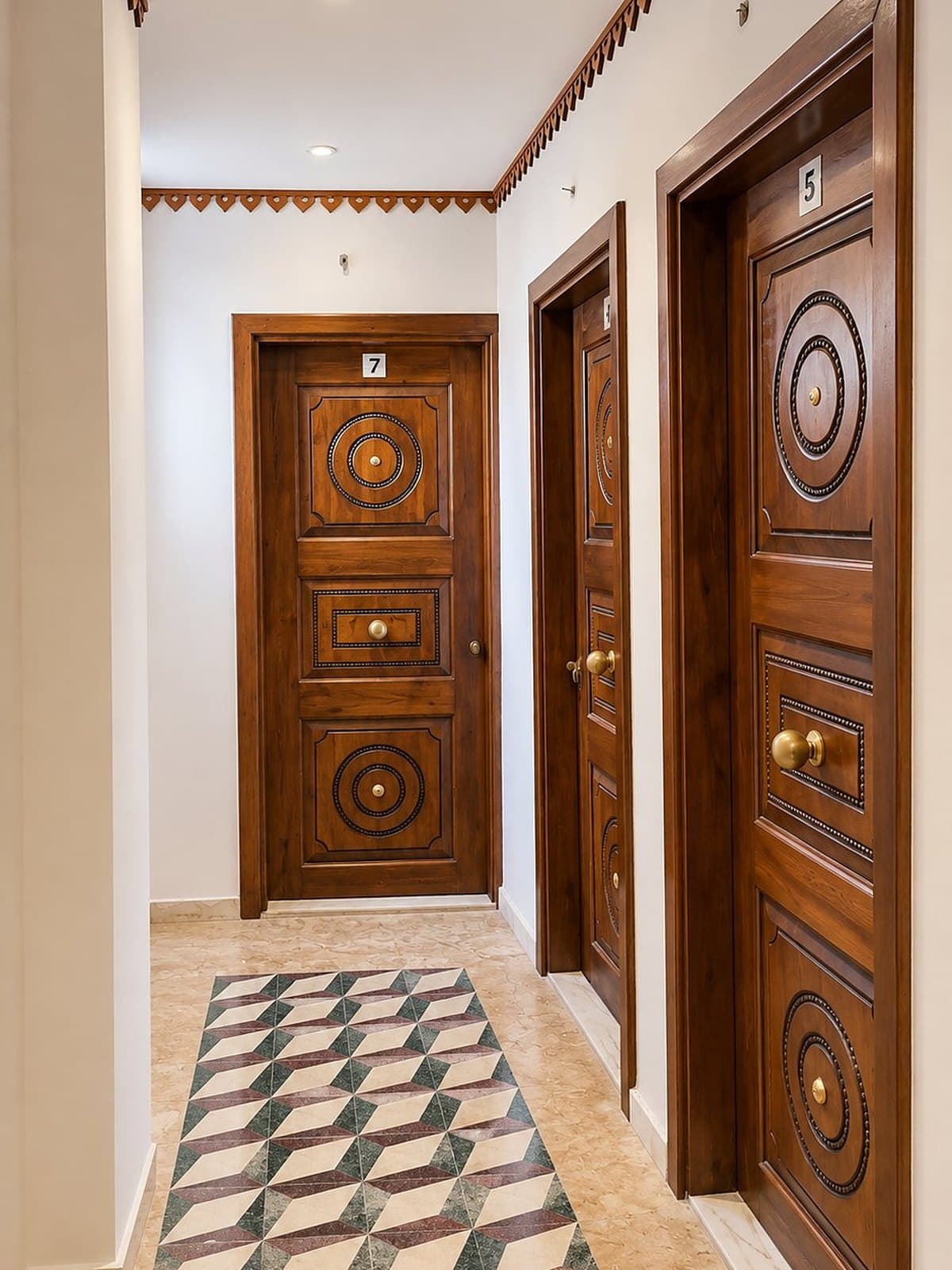
A quiet corridor of carved wooden doors, each with its brass knob and room number, leads to the rooms. There are six types of room, two of them looking out to the norias, and every one has a private bathroom, air conditioning, heating, hot water and internet.
Each room sleeps one to three guests in its own beds, and one more guest can sleep on an extra bed or a free mattress. You book the whole room at one price per night, whatever the number of guests, and pay in cash on arrival.
- Single Room with Noria View$35
- Double Room with Tree View$35
- Twin Room$35
- Triple Room$40
- Suite with Tree View$50
- Suite with Noria View$60
Next door
Orontes Restaurant
Orontes Restaurant stands in its own stone building right next to the hotel, 57 m from the gate, and carries the same name. Its kitchen serves Syrian dishes, grills and Western food, and it is open to everyone, every day from 10 am to midnight.
Breakfast is not included in the room price, so guests choose: order it through the hotel from 7 am and have it brought to the room for $5, or walk over from 10 am and order what you like. Lunch and dinner are a minute's walk away, with or without a reservation.
- Syrian dishes
- Grills
- Western food
- Every day, 10 am to midnight
- Breakfast in your room or next door
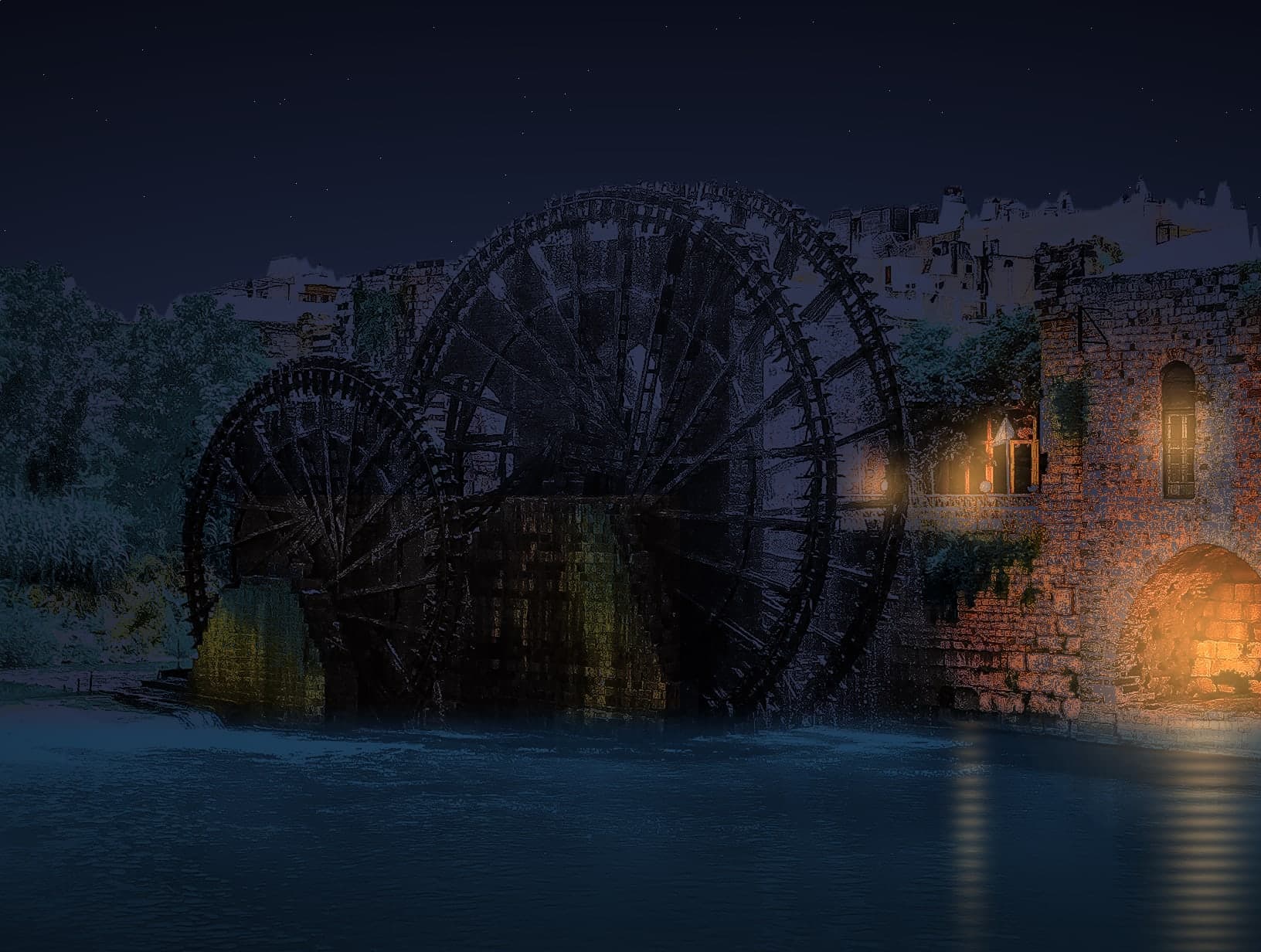
Photo: Abdulhadi.Najjar · CC BY-SA 3.0 · night version edited
Hama · on the banks of the Asi
The river and the name
Orontes is the old Greek name of the Asi, the river that runs through Hama. Its Arabic name means “the rebel”, often explained by its course: it flows north, unlike the other rivers of the region, from Lebanon through Homs and Hama to Antakya and the sea.
Along its banks in Hama turn the norias, great wooden water wheels that lifted the river into aqueducts for the town and its gardens. The largest, al-Muhammadiyya, was built in 1361 and stands about 21 metres high. The hotel's street is named after Abu al-Fida, the prince and historian who ruled Hama in the 14th century.
Your hosts
Orontes Hotel is a small hotel, and we like it that way: a house with a few rooms, where guests are welcomed by name and not by a number.
Ahlan wa sahlan, the old Syrian welcome, means you are among family, on easy ground. That is how we try to host: simply and warmly, with time for our guests and someone to ask whenever you need anything.
We are happy to help with what to see in Hama, from the norias along the Asi to the old quarters, and with where to eat, starting with Orontes Restaurant next door. Before you arrive, the quickest way to reach us is WhatsApp.
Questions about the hotel
Is Orontes Hotel in an old house?
Yes. Orontes Hotel is an old Syrian house: a stone gate on the lane, an entrance hall of black and cream ablaq stone and a vaulted iwan.
What is an iwan?
An iwan is a vaulted hall of a traditional Syrian house, closed on three sides and open on the fourth. At Orontes, it is a cool place to sit through the heat of the day.
Where is Orontes Hotel?
On Abi al-Fida Street in the Al-Tawafra quarter of Hama, Syria, a few steps from the Asi river and its norias.
Why is the hotel called Orontes?
Orontes is the old Greek name of the Asi, the river beside the hotel.
Does Orontes Hotel have a restaurant?
Yes. Orontes Restaurant is in its own building right next to the hotel. It serves Syrian food, grills and Western dishes and is open to everyone, every day from 10 am to midnight.
Is breakfast included in the room price?
No. Guests choose: order breakfast through the hotel from 7 am and have it brought to the room for $5, or have breakfast at Orontes Restaurant next door from 10 am and pay for what they order.
How do I book a room?
Choose your dates and room on the website and send a booking request. We reply within 12 hours, and you pay in cash on arrival.
أهلاً وسهلاً
The door is open
Choose your dates and room, and we reply within 12 hours. Nothing to pay before you arrive.