Around the house

What to see in Hama, near Orontes Hotel

Hama is the city of the norias, the great wooden water wheels that have turned on the Asi river for centuries. Orontes Hotel stands in the old Al-Tawafra quarter, a short walk from Al-Nuri Mosque, Azm Palace, the norias and Hama Castle.

Its name comes from an old Canaanite and Aramaic word for a fortress, after the castle hill where the city began, and it counts among the oldest cities in the world. It was the seat of an Aramaean kingdom, took the name Epiphania under the Seleucid kings, and returned to its old name in Roman times.

Muslims entered Hama in 639 (18 AH). It flourished in the 12th century, when Nur al-Din Zengi rebuilt its walls and castle and founded Al-Nuri Mosque, and again under the Ayyubid prince and historian Abu al-Fida, who ruled it from 1310 to 1331. Hama is still called the city of Abu al-Fida, and the hotel's street carries his name. Today it is Syria's fourth-largest city, about 47 km north of Homs and 220 km north of Damascus by road, and spring is its most beautiful season.

By the hosts of Orontes Hotel

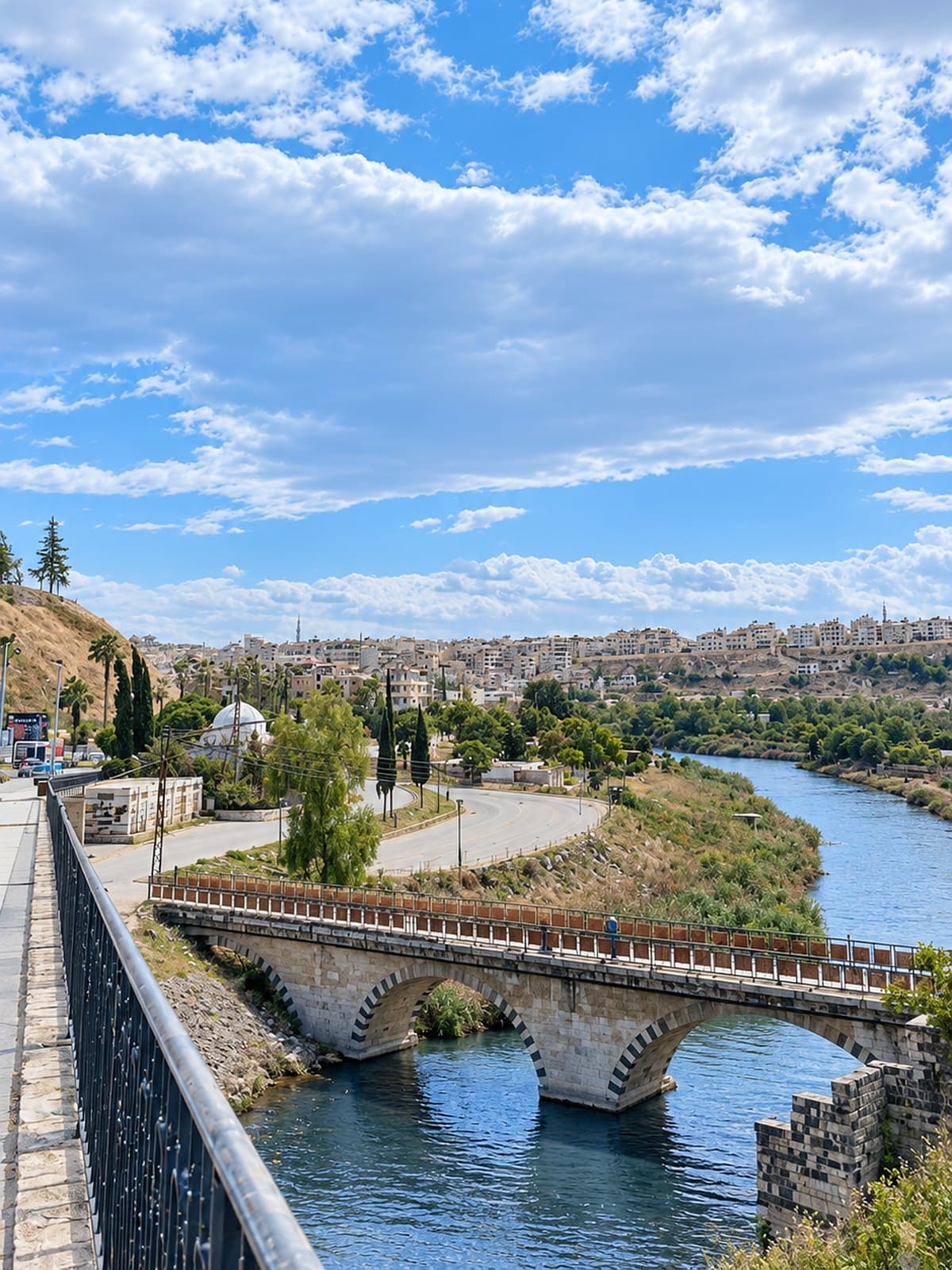
The Asi river winding through Hama under an old arched stone bridge, the city rising on the hills beyond under a wide cloudy sky
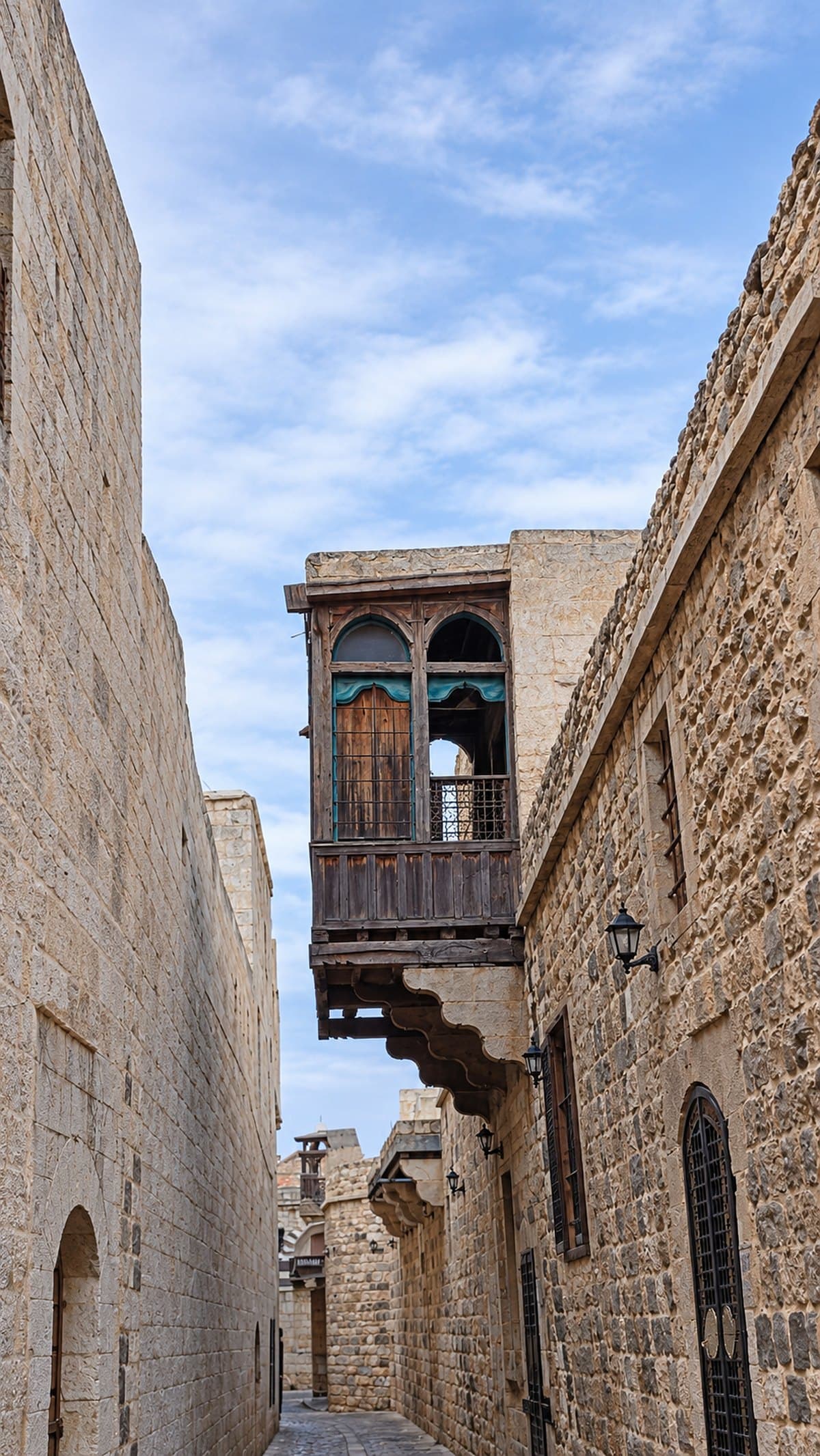
A narrow stone lane in the Al-Tawafra quarter of Hama, with an old wooden balcony jutting out on carved stone brackets

Your quarter

Al-Tawafra, in the old heart of Hama

Al-Tawafra lies on the western bank of the Asi in the heart of old Hama, part of the larger Al-Bashoura quarter, which has been lived in since the 12th century. Residents say it takes its name from the largest family that once lived here.

Its oldest building is Al-Asfuriyya School, founded by Najm al-Din Tuwtan in 1188 (584 AH) and one of the oldest schools in the province. Most of the quarter took shape in the Mamluk era, from around 1260, and for more than 750 years its palaces, houses, baths and khans have kept their old form along narrow stone alleys.

Its grandest house is Azm Palace, built in the 18th century as the residence of the governor As'ad Pasha al-Azm and his family. Today it is the Museum of Popular Traditions, and among its treasures are antiquities found in the Asi valley and on the hill of Hama Castle.

Three old norias turn at the edge of the quarter, Al-Uthmaniyya, Al-Mu'ayyadiyya and Al-Ma'muriyya, among old mosques and historic baths. Many of the older residents still keep the customs and dress of the past.

Walking map

Old Hama on foot from the hotel

  1. Al-Nuri Mosque1 min on foot
  2. Azm Palace1 min on foot
  3. The norias on the Asi2 min on foot
  4. Hama Castle5 min on foot
  5. Ibn Rushd Street6 min on foot
  6. Al-Asi Square10 min on foot
Orontes HotelN100 m
Positions from map coordinates; walking times from the hotel gate.

In town, on foot

Places to visit in old Hama

  1. Orontes Hotel gate
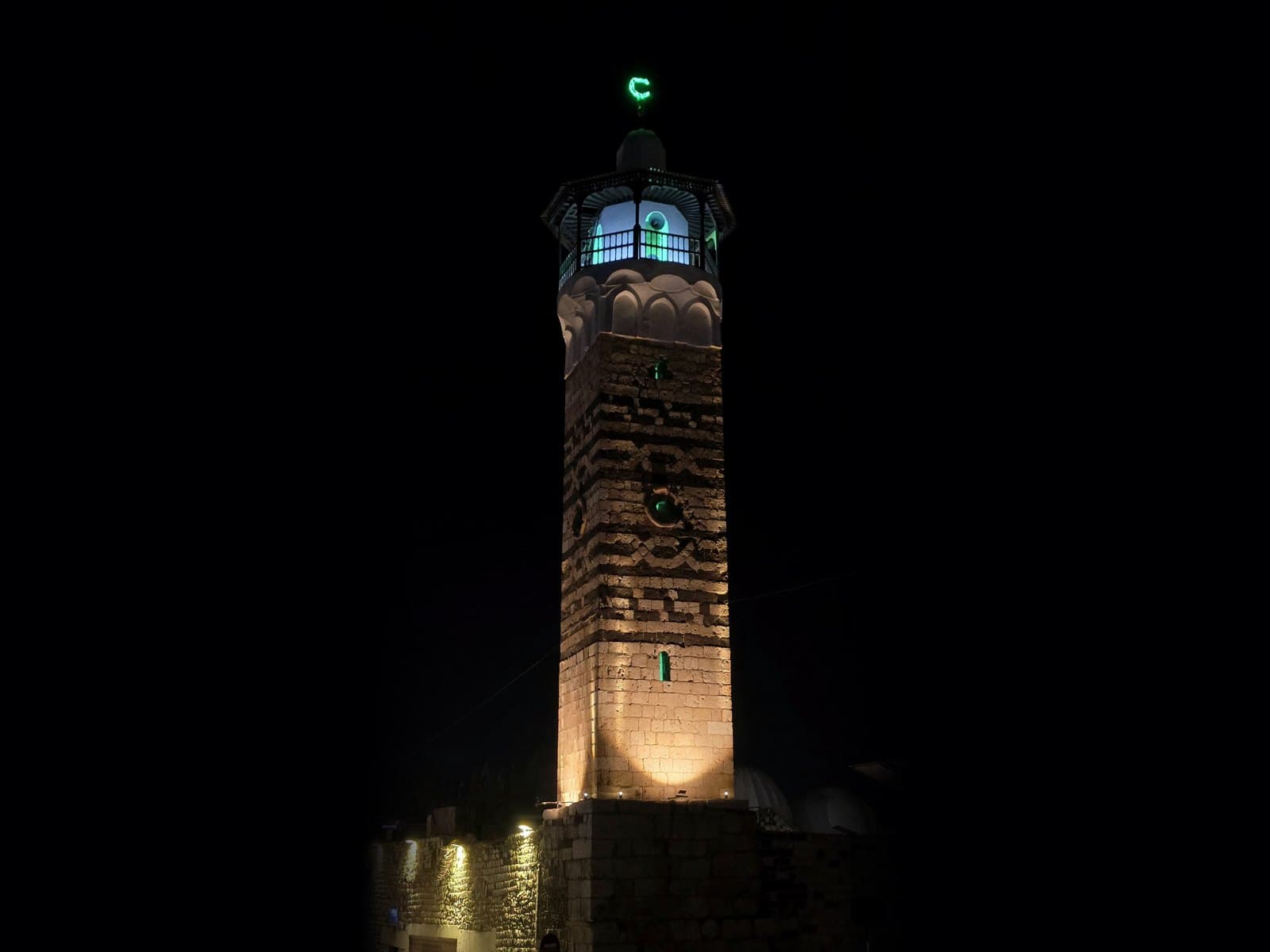
  2. The square minaret of Al-Nuri Mosque in Hama at night, its bands of black and white stone lit from below, the balcony and crescent at the top glowing green

    ≈ 80 m from the gate · 1 min on foot

    Al-Nuri Mosque

    جامع النوري

    Built by Sultan Nur al-Din Zengi from 1162 on the bank of the Asi, the mosque is one of the oldest in Hama. Its square minaret is laid in alternating black and white stone, and the pool in its courtyard is fed by the al-Ja'bariyya noria.

    • From 1162
    • Black-and-white minaret
    • Pool fed by a noria
    More on Wikipedia
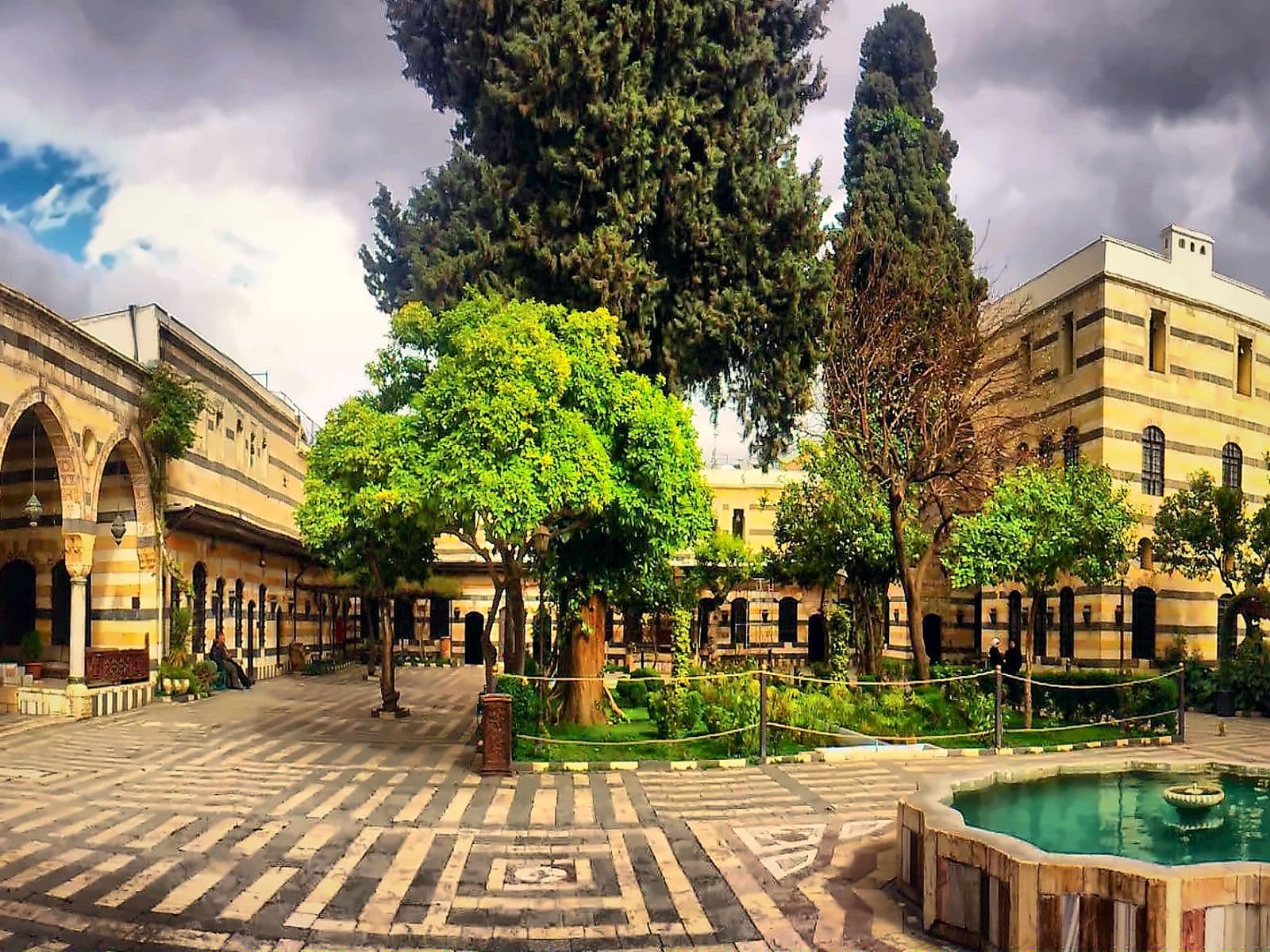
  3. The courtyard of Azm Palace in Hama: arcades of striped black and white stone, tall cypresses and a fountain pool

    ≈ 100 m from the gate · 1 min on foot

    Azm Palace

    قصر العظم

    As'ad Pasha al-Azm began this Ottoman residence above the Asi around 1740; his family lived here until 1920. Since 1956 it has housed Hama's Museum of Popular Traditions, with its Golden Hall, a courtyard with an old magnolia tree and a family hammam.

    • Around 1740
    • Museum since 1956
    • Golden Hall
    More on Wikipedia
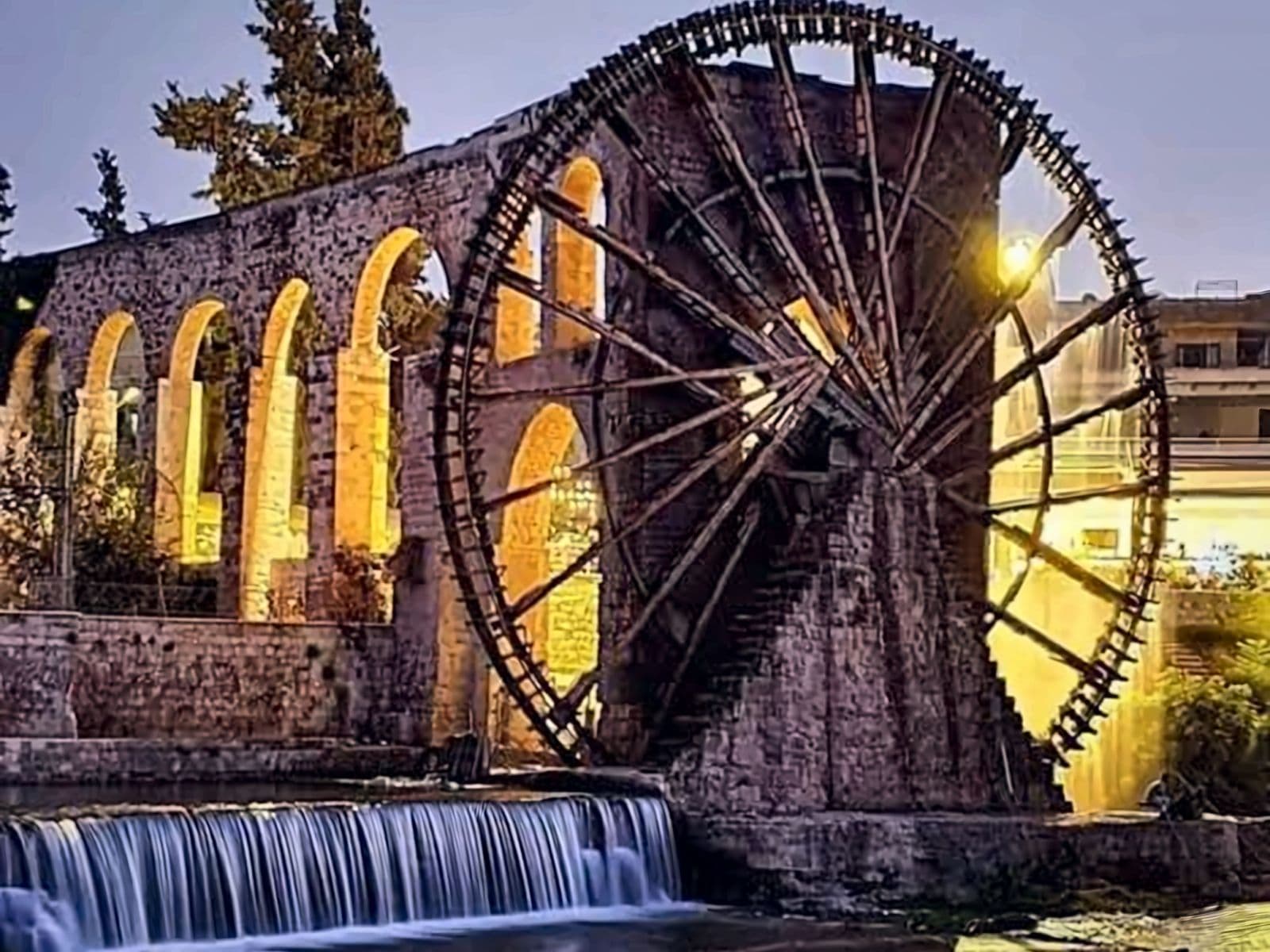
  4. A noria and the arches of a stone aqueduct lit up at dusk on the Asi in Hama, with water spilling over a weir

    ≈ 80 m from the gate · 2 min on foot

    The norias on the Asi

    نواعير حماة

    The great wooden water wheels that Hama is known for lift water from the Asi into aqueducts with every slow turn. About 40 still turn, 19 of them inside the city, and they have been on UNESCO's tentative World Heritage list since 1999. The nearest group, the Kilaniyat, includes a noria named al-Tawafra, after the quarter.

    • About 40 still turn
    • UNESCO tentative list, 1999
    More on Wikipedia
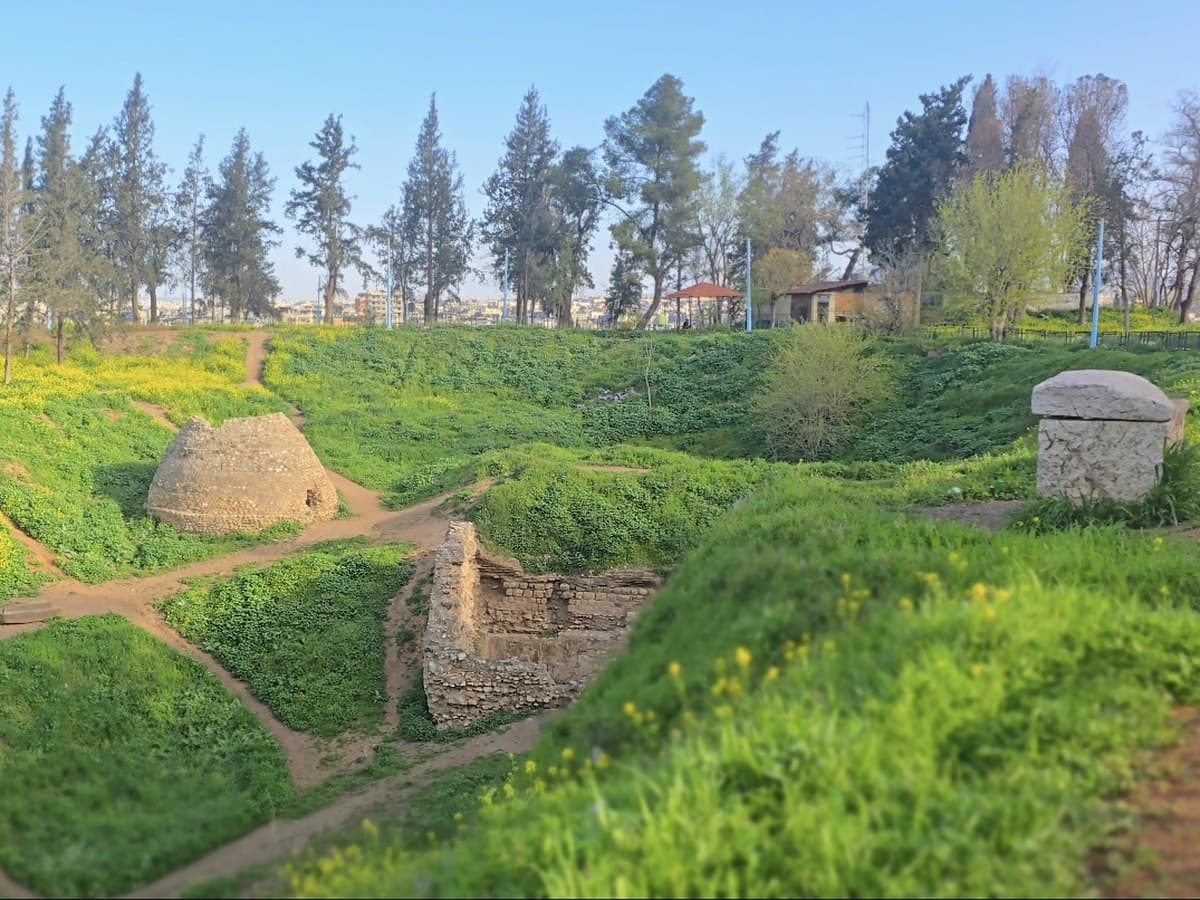
  5. On top of Hama Castle hill in spring: excavated stone walls and a small domed stone ruin among green grass and yellow wildflowers, cypress trees and the city beyond

    ≈ 340 m from the gate · 5 min on foot

    Hama Castle

    قلعة حماة

    The hill where Hama began: Danish excavations in the 1930s found 13 layers of settlement, from the 5th millennium BC to the Mamluk period. Little of the castle survives today; the hilltop is a public park with trees, a favourite place for an evening walk.

    • 13 layers of settlement
    • From the 5th millennium BC
    • Public park
    More on Wikipedia
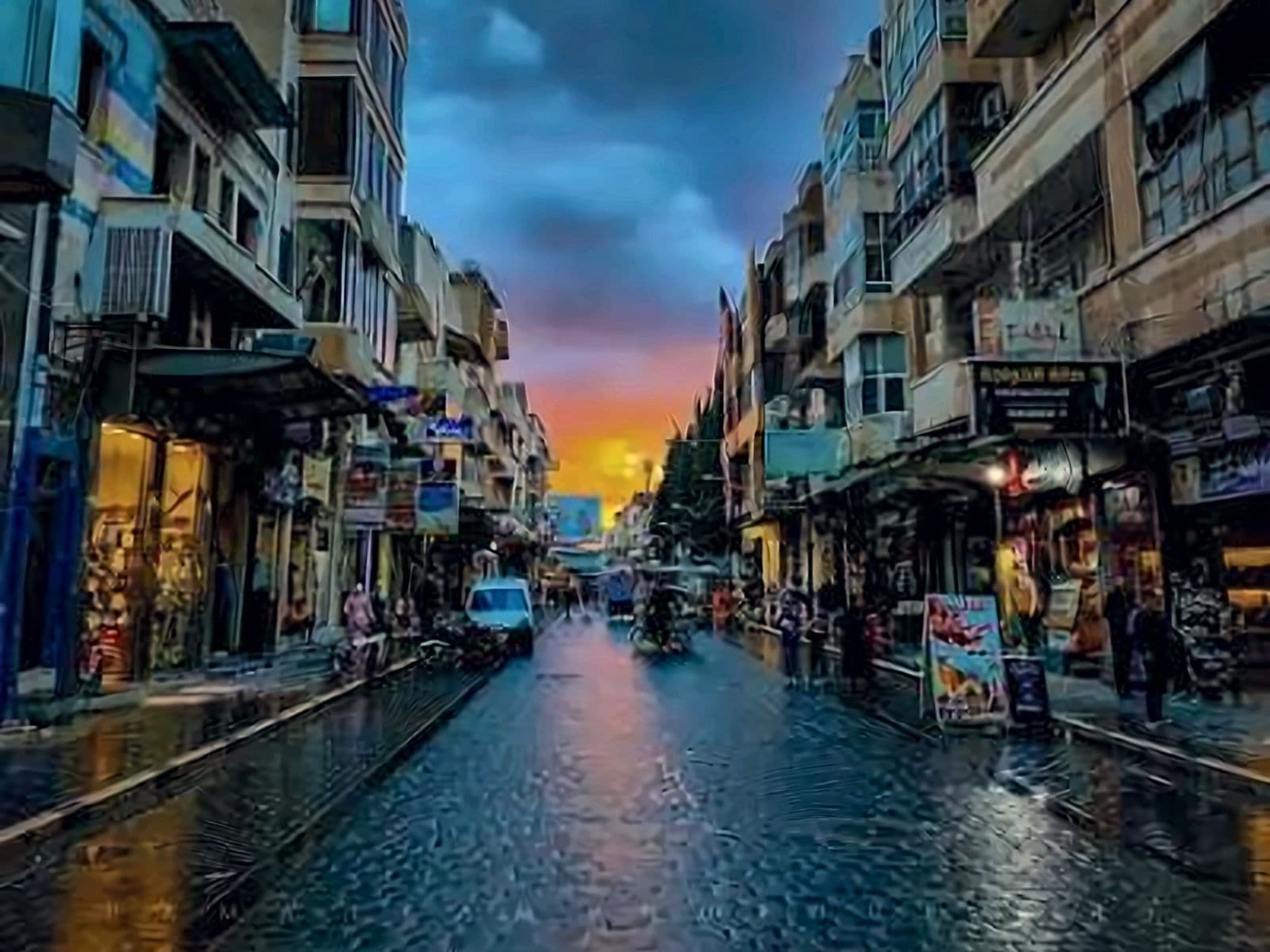
  6. Ibn Rushd Street in Hama at dusk after rain, shops on both sides and the wet road shining
    Photo: Hama Team Photography · cropped and colour-adjusted

    ≈ 320 m from the gate · 6 min on foot

    Ibn Rushd Street

    شارع ابن رشد

    Hama's main shopping street, where locals come for clothes, shoes and everyday things.

    • Main shopping street
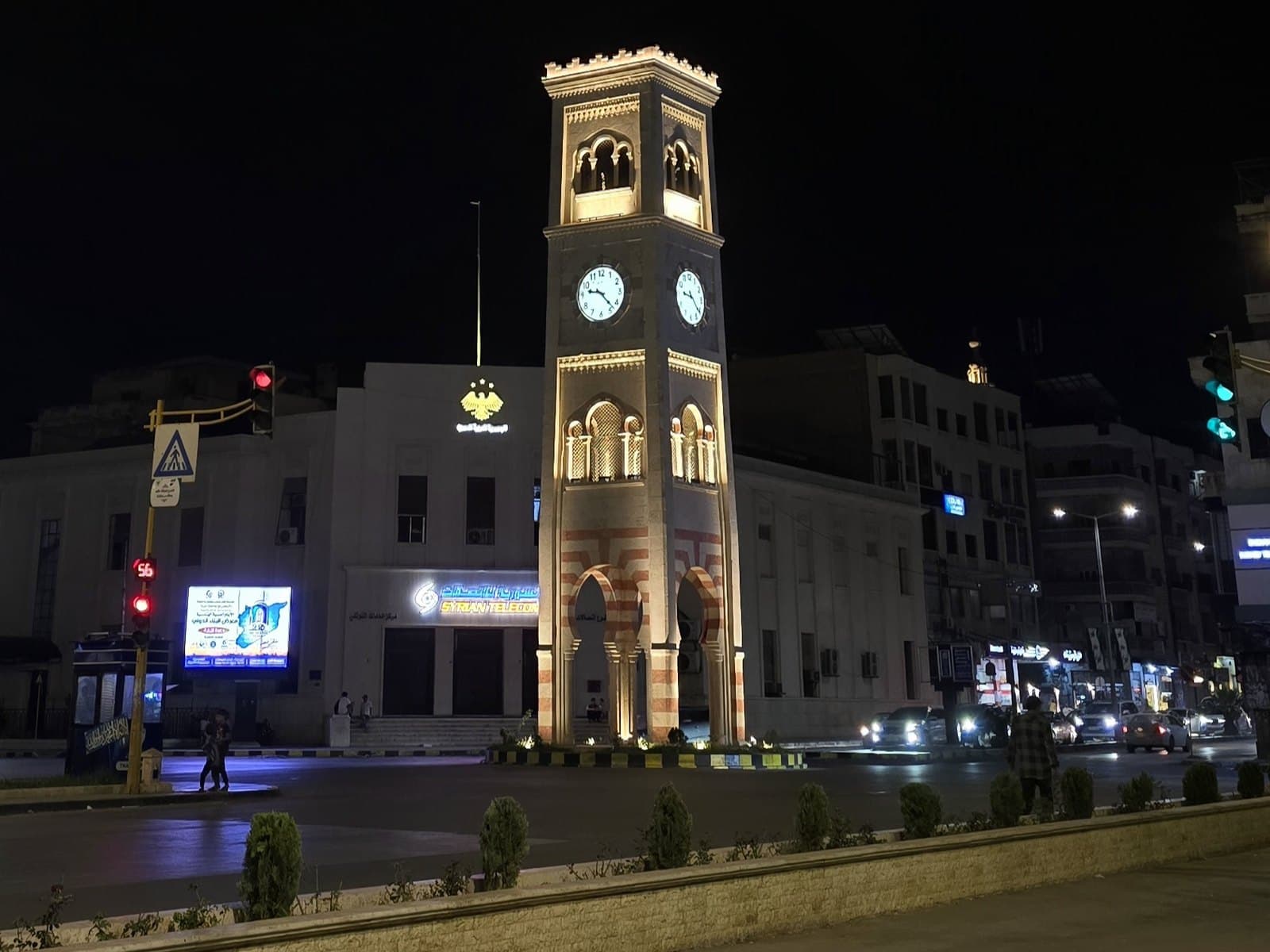
  7. Al-Asi Square in Hama at night: the lit clock tower with its crenellated top, clock faces and striped arches, in the middle of the square among the surrounding buildings and traffic

    ≈ 420 m from the gate · 10 min on foot

    Al-Asi Square

    ساحة العاصي

    Hama's main square, named after the river, and the place where the city meets. From here the streets of the city centre lead off in every direction.

    • Hama's main square

Stay in the middle of it

Every place on this page is a short walk from the hotel gate. Book a room, and the old town is on your doorstep.

Questions about Hama

What is Hama known for?

Hama is known for its norias, the great wooden water wheels on the Asi (Orontes) river. About 40 still turn, 19 of them inside the city, and they have been on UNESCO's tentative World Heritage list since 1999.

What can I see near Orontes Hotel?

Al-Nuri Mosque and Azm Palace are a minute's walk from the hotel, and the nearest norias two. Hama Castle, with its hilltop park, is 5 minutes away on foot, Ibn Rushd Street, the main shopping street, 6 minutes, and Al-Asi Square, the city's main square, 10 minutes.

How far is Orontes Hotel from the norias?

The nearest norias, the Kilaniyat group on the Asi, are about 100 metres from the hotel gate, a 2-minute walk. Al-Nuri Mosque and Azm Palace are even closer, a minute away.

What is the Al-Tawafra quarter?

One of Hama's oldest quarters, on the western bank of the Asi in the old city, and the quarter where Orontes Hotel stands. Its oldest building, Al-Asfuriyya School, dates from 1188, and most of its stone houses, palaces, baths and khans took shape in the Mamluk era, from around 1260. Azm Palace and three old norias belong to the quarter.

How old is Hama Castle?

Excavations found 13 layers of settlement on the hill, from the 5th millennium BC to the Mamluk period. Today the hilltop is a public park.

Who built Al-Nuri Mosque in Hama?

Sultan Nur al-Din Zengi built it from 1162. Its square minaret is laid in alternating black and white stone, and its courtyard pool is fed by a noria.

Why is Hama called the city of Abu al-Fida?

After Abu al-Fida, the Ayyubid prince and historian who ruled Hama from 1310 to 1331. Orontes Hotel stands on the street named after him, Abi al-Fida Street.

What does the name Hama mean?

It comes from an old Canaanite and Aramaic word for a fortress, after the castle hill where the city began. Under the Seleucid kings the city was called Epiphania.

أهلاً وسهلاً

The door is open

Choose your dates and room, and we reply within 12 hours. Nothing to pay before you arrive.